Resilience is a Superpower
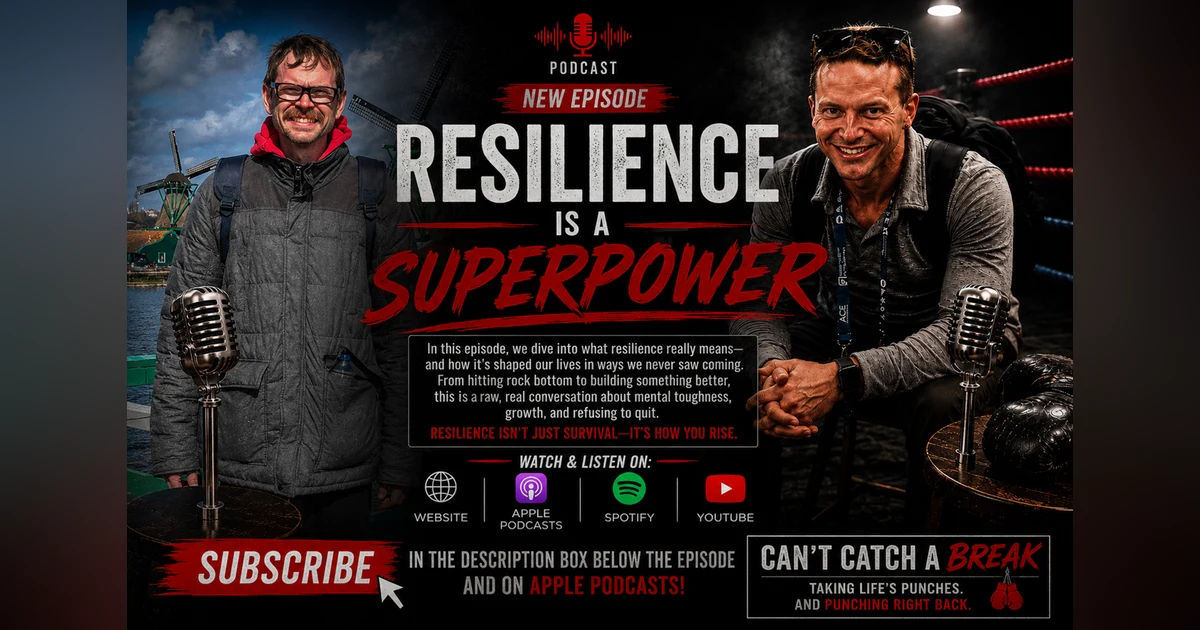
Resilience Is a Superpower What happens when life doesn’t just knock you down—it keeps coming? In this episode of Can’t Catch a Break, we get into resilience, adversity, and what it actually takes to keep moving when life doesn’t go according to plan. We talk about the experiences that tested us, the moments that changed us, and how some of the hardest chapters of our lives ultimately shaped who we became. This isn’t about pretending everything is okay. It’s about adapting, growing, finding s...


Resilience Is a Superpower
What happens when life doesn’t just knock you down—it keeps coming?
In this episode of Can’t Catch a Break, we get into resilience, adversity, and what it actually takes to keep moving when life doesn’t go according to plan. We talk about the experiences that tested us, the moments that changed us, and how some of the hardest chapters of our lives ultimately shaped who we became.
This isn’t about pretending everything is okay. It’s about adapting, growing, finding strength when you’re running low, and getting back up one more time.
Because resilience isn’t just surviving what happened to you. It’s what you do next.
🎧 Watch or listen on the website, Apple Podcasts, Spotify, and YouTube
SPEAKER_02
Hey everyone, welcome back to another episode of Can't Catch a Break. I am Reese, your host, and I'm joined today by Tad Hopp. Hello, Tad.
SPEAKER_00
Hello, how are you?
SPEAKER_02
I'm good. How are you?
SPEAKER_00
Great. Thanks for having me on.
SPEAKER_02
Of course. Tad and I actually met in a Facebook group for uh gay and sober men, which is pretty cool, and he wanted to share his story. So why don't you tell me, you know, about a time where life was throwing you a bunch of punches?
SPEAKER_00
Oh my goodness. You know, there's there's so many uh options here. I've not had the easiest life or the easiest time in life. Um, but the one I think I really want to focus on is, you know, I was a teenager growing up in Texas, uh in a suburb of Dallas, and you know, I knew I was gay when I was, you know, around 12 or so, but I didn't feel proud of that or happy about that. I was I had a lot of shame about it. Um and growing up in a more conservative part of the country, I'm feeling very isolated from my friends and my peers. Um, this is around the time when my stepfather came to the picture, and he was very verbally abusive to me and my mom, and emotionally manipulative, and just feeling like I didn't have anyone supporting me or loving me or caring about me. Um, you know, I was getting bullied at school for being different. I wasn't out, but I wasn't well caused either, so people picked up on things, and it was a very rough time. And I was, you know, suicidal. I would, you know, lie awake at night and and want the gay to get taken away, pray for taken away, all of that, and that wasn't happening. Um, and I wasn't dating anybody. I wasn't I wasn't achieving those development of milestones that so many youth get to have. I wasn't experiencing. So that was a time in my life when I just really felt completely punched down by life over and over constantly.
SPEAKER_02
Man, that must have been tough for you, especially you know, in Texas. Very, very conservative. Um are you still in Texas or did you move from there after all this happened?
SPEAKER_00
No, so I moved let's see, so I finally came out of the closet in 2009 when I was about 25. And then I moved away from Texas like a year later. I moved to Chicago for a year. Um, and Chicago was really great. I was able to really blossom and really embrace my my gayness there. I was I marched in the Pride Parade the year I lived there, uh, and I had a really wonderful experience in terms of that. Um, but I also realized that Chicago wasn't where I was meant to stay, so I ended up after a year I moved to California, to San Francisco. Um I got I went to graduate school out there, and I stayed there for 15 years. Um, and so it kind of became owned to me. I hadn't I hadn't planned to stay that long. I was like, I'll stay for I finish my degree and then I'll I'll move somewhere else. But I ended up just liking the city and the culture there and had a good group of friends there, so I was like, oh I'll just keep staying, and I didn't leave for 15 years. So yeah.
SPEAKER_02
Wow. Are you still in San Francisco?
SPEAKER_00
Uh no. So last year I I finally decided it was time to move on, and I moved uh to Europe. I live in Amsterdam now, uh as of end of last year.
SPEAKER_01
Yeah. I just thought I was ready for something different, ready for life's life child change. It's actually been really great.
SPEAKER_00
You know, it has its challenges. I'm not gonna lie, you know, moving to a foreign country is um not easy. It takes a lot of energy and and a lot of focus, and it can be very challenging, but I'm really liking it here. Um I like the culture and the people, I I like the atmosphere. Uh, I got a great apartment. Um yeah, so I'm I'm adjusting slowly. It's it's been a process for sure, but it feels definitely like you know, I'm I live I'm living into who I was supposed to be. Like finally after all these years, you know, I wanted to move abroad when I was like 15 and and couldn't, you know, growing up just couldn't make it happen, and I'm finally able to fulfill that lifelong dream that I had all those years ago.
SPEAKER_02
Oh, I'm sure. So, you know, with all the different places, you know, that you live, who's been in your corner when you were going through all that stuff and who's still in your corner?
SPEAKER_00
Yeah, that's a good question. Um I didn't have a huge number of people in my corner back then. Um, you know, I had some teachers who was really uh who were really good to me and really kind, but um I wasn't able to be fully myself with them even back then. Um so I don't know that I had a whole lot of people back then who were really in my corner. Um I guess my mom kind of was uh in her own way. Comic, I know, but as it's not as it usually is with parents. Um but you know she really did have my back in a lot of ways. Um and when I did finally come up to her, she was she was very supportive and very you know accepting and like, oh, that's you know, totally cool. I've known since you were 15. It's not a problem for me. I I still love you and I still um support you, all that stuff. Um so she's really she was really kind of a big um person in my life that really was uh helpful for me. Uh she passed away a few years back, unfortunately.
SPEAKER_02
Oh, I'm so sorry.
SPEAKER_00
Yeah, you know, it was she'd been in her health had been in decline for a long, long time. So it wasn't like we didn't know it was coming. It still hurt, of course, but it was a little easier knowing that we had time to prepare for it. It wasn't sudden. She got to go on her own terms in her own way, so it made it better.
SPEAKER_02
I'm sure, I'm sure. Um, do you still, you know, do you have a good support system over there in Amsterdam? I would hope so.
SPEAKER_00
You know, I it's I have yes, I I've had to rebuild it from scratch because I moved here not knowing anybody, not knowing the language, not I've really only been here once, and that was like 30 years ago as a teenager, so I really didn't know anything about the city. Um so I really had to start over in terms of all of that and find support systems. Um I go to A meetings. And the first when I first got here, I was going every single night, like because I had nothing else to do, I didn't have Wi-Fi yet, so I was like, I'll just go to A meetings. So I'd go every single night to a meeting somewhere in the city, and that became a good way to meet people and get support and get advice on what to do or how to do stuff, how to navigate the city. It it became my lifeline. So I still go to A meetings about once a week. Um and that's been really an amazing way to connect with people here and and you know, find my tribe, as it were. Um, because A really was my lifeline when I was getting when I was nearly sober, because I didn't have any friends at that point, they'd all left me because of my drinking. So even so back then, you know, when I got sober almost nine years ago now, um A became kind of a lifeline in my support system. Congrats. So yeah, yeah, thank you. Uh it's been a long road, let me tell you. Yeah, uh, I've earned every day these almost long years.
SPEAKER_02
Everyone, yeah. Yeah.
SPEAKER_00
Um, yeah, so A really has become my lifeline out here. Um, but and since then I've kind of branched out. I've met friends through others' activities. Um, you know, I'm in a hiking group, I'm in a running group, I have made friends other ways, I've joined a church out here, I've just I've managed to really find people. Um I don't I wouldn't say I have like a super huge group of friends at this point yet, but that'll come with time. I'm an introvert, I take things slowly, I don't warm up to go right away. Um that's not my nature, so it's it takes some time to really build that support network. And so I'm really that's something I'm really working on right now, is really building up that support network for when my husband arrives in the year and when I get settled more here, I already have good people in my corner here.
SPEAKER_02
For sure, for sure. Now, kind of on the you know, flip side, is there anyone that you've lost like who you thought would be, you know, in your corner, but ended up not being, and how did that happen and affect you?
SPEAKER_00
Yeah, so I did have a really solid group of friends in San Francisco a decade ago. We met and became friends, and we had like movie nights and dinner nights and dinner parties and Thanksgiving and all this stuff. And unfortunately, what happened was my drinking kind of drove them away. Um it's the story every alcoholic, I'm sure, knows. You know, you get really drunk and you say things you don't mean, and they all stop talking to you because of it, and you don't remember that this happened because you were so drunk you have no memory of it happening, and you wake up to find a bunch of messages from one of your friends saying, Hey, you were really rude at the party last night. I don't want to talk to me. That's kind of what happened. In my case, it was over the course of several months that I got this information and got this uh this breakup happening. But um, yeah, that really hurt because I really thought that they had I had found a really good solid group and that they would support me through everything, and no, they wouldn't. And I don't blame them. I'm not I'm not blaming them at all. I mean, my behavior was not great. I was not a really good friend to any of them, so I don't blame them in any way for wanting to back away from being my friend, but it did hurt at the time, and I did get really defensive, and you know, like, oh, what do they know? They weren't good friends anyway, screw them, all that stuff.
SPEAKER_02
And I've since realized that no, actually, I was the problem, not uh, yeah, that has happened, I feel like, with a lot of you know, alcoholics that we all know for sure. Did you try to make amends with them during like going through the steps and everything?
SPEAKER_00
You know, I actually did, and most of them took it very well, and they were like, Yeah, thank you for that.
SPEAKER_02
That's awesome.
SPEAKER_00
But but none of them were willing to want to talk to me again. They're like, you know, thank you for your amends, I appreciate it, but I don't want to have you in my life anymore.
SPEAKER_02
Yeah.
SPEAKER_00
Which really sucked because I really was hoping that I could like be friends with them again and we'll all be forgiven. But I understand, you know, I they I burned that bridge and they didn't want to rebuild it.
SPEAKER_02
Yeah. But hey, you took the biggest step, which was make amends, and that's always like the hardest step. It's going to, you know, make amends with everybody. So at least you did it. At least you did it.
SPEAKER_00
Yes, yes. Yeah, I mean, I definitely that step was really hard. I mean, I made amends with my mom and my brother and other friends in my wife, and those all went well. But these amends with these friends didn't go how I hoped they would at all. And I think I think that what I learned from that is you know, don't come in with an agenda. Like, yeah, don't come in thinking that you're gonna un become best friends with these people again, because you're not necessarily going to. Maybe if you're lucky, they might want to be friends with you again, but that's not why you're doing the events.
SPEAKER_02
So yeah. Perfect. And you're uh remind me, nine years sober?
SPEAKER_01
I will have nine years in November.
SPEAKER_02
Congrats, awesome. What's been like, you know, what was your toughest year out of those nine? Or eight, soon to be nine. What was your toughest year?
SPEAKER_01
They've all been tough in different ways.
SPEAKER_00
I mean, in that nine-year time, I've you know, gone through a breakup and gone through losing my friendships, and I've gone through COVID happened during that time, and you know, my mom died, I got engaged, I got married, I moved overseas, like all these things have happened in that nine-year time. So pointing to like one specific year is like that was the hardest year ever. It's more like it's been a series of hard things over a course of nine of a nine-year period that if I was still drinking would have broken me completely. And I've only able to get through it because I was able to be sober and stay sober.
SPEAKER_02
Perfect. That's awesome. When you know those cravings, I'm sure, were happening. What'd you tell yourself and remind yourself?
SPEAKER_00
So I I do what they'd say in AA's, you know, play the tape. Like, I have enough time under my belt that I still remember what it was like when I was drinking, how much worse it was. And so remind myself, like, do you want to go back to that? Do you want to go back to, you know, drinking every night and blacking out and waking up with strangers and all that stuff, or do you want to have the life you have now, which has its issues, has its challenges, but is not that life. So and I hope that I will always remember this is what you had before, and it was not any good. So at least what you have now, it may not be perfect, but it's you're not drunk every night.
SPEAKER_02
No, for sure, for sure. Um, and kind of like I guess you know the last question is like whenever you do get those super life punches, like a punch in the gut, or just punching you all the way down to the floor, how do you punch back?
SPEAKER_00
I think I have punched back in a few ways. So one is I have really um I think by getting out of out of out of my home and out of my stay-home state, that really was the way I punched back because I said I'm not gonna take this anymore. Um, that was one way I really punched back by just getting out of that situation that I was in. You know, there's a saying you can't heal in the place that made you sick, and home was making me sick, being around my stepfather, being around my school friends. That was it was not healthy for me. So I got out of it and I moved first to college and then out of the state and then out of the country. So like all these things really helped me punch back against those uh attacks. Um secondly, you know, getting sober was how I punched back, you know. Um I was able to challenge myself to do the hard thing and to say, I'm not going to live like this anymore, and I'm going to instead create a better life for myself. And you know, one day at a time, as they say. I mean, those first 60 days sucked. Like, I got sober right after breakup and right during Thanksgiving, and so like that first 60 days was like Thanksgiving and Christmas and New Year's, the one the one three punch, one, two, three punch of like those three holidays. Back to back, right? Newly sober, newly single, no friends, nothing. It was just absolute misery. My life was like hell, and I just I wanted to drink so bad. And I told myself, you cannot go back to that life that is not healthy, it will kill you. Life may suck right now, but drinking will not fix it. And so by getting sober, I was able to punch back, yes, and say that this was really bad, but it would be so much worse if you were to pick up a drink again. And so that's the way I punch back. And then lastly, you know, a way that I punch back is um, so I I've I've started a business since I moved, and I help, you know, gay men heal from trauma and shame and um abuse uh that the church has caused them. And for me, that's a way of punching back against the abuse I got from church people in my life growing up. So that's how I punch back by helping other people heal on their own journeys of you know, whatever, of being told they're, you know, that they're bad or that they're an abomination or that you know they're going to hell or whatever else. And you're just really punching back against that narrative and saying, no, like you are not that, you are a beautiful person as you are, and that being gay is not a is not bad, it's not a sin, it's not wrong, all these things. So by doing that work, I am single-handedly punching back against a system that wants to oppress my our sexualities.
SPEAKER_02
That is you know, that's awesome. That's quite the career path. Um and it I feel like it suits you with everything that you kind of share today. So it's absolutely, you know, I think that's what you're calling. For sure.
SPEAKER_01
Yeah, yeah, I really feel like it fits, you know. Oh, sorry, go ahead.
SPEAKER_02
Oh no, all you, all you.
SPEAKER_01
Oh, sorry. Yeah, sure. Um, no, I just it it fits, it does fit in a lot of ways.
SPEAKER_00
It was something I was resisting I was resistant about for a long, long time. I had this idea like 10 years ago, and I wasn't ready to do it, I think, because I wasn't sober yet, so I think I needed to get sober first and do my own healing, and then I could focus on others. Um now finally here I am, you know, ten years later with all this sobriety time under my belt, and all this other experience and training and all this stuff, and now it's like this is the time to do this. This is the time to make this happen to help others on their journey. So yeah, it just feels like a natural culmination of everything for me.
SPEAKER_02
Oh, for sure. And I'm it's it's meaningful work, I'm sure. Like even the smallest little bit, you know, goes a long way for somebody, for sure.
SPEAKER_01
Yeah, for sure.
SPEAKER_00
I mean, like I love I love being able to help, you know, men heal from their trauma and heal from their abuse and be able to tell them that you know they're beautiful as they are and that you know who they are is perfect, they don't need to change anything about themselves, they don't need to pray it away or wish it away or whatever. So that kind of work is so needed, unfortunately. And I wish it wasn't. I wish we were in a place where that wasn't needed now, but we're not there yet as a society or as a country or as a world, and so I'm hoping to push back against this narrative of we are bad and saying no, we are not.
SPEAKER_02
Right. I guess you know, probably the l another last question that I have is if someone were to come to you like today or tomorrow asking for help, what would you tell them?
SPEAKER_00
I've been thinking about this actually. I think for me, resilience is a superpower. Resilience is what has gotten me through so much of the stuff I've been through over the years, the abuse, the bullying, the shame, the self-loathing, all of that. Um and I've withstood it and I come out the other side. And I think for a lot of people, they just need to really lean on their resilience and walk through that fire and get through it and navigate it with help, hopefully. I mean, either for me or someone else or whatever. And there is help, there is hope out there, there is help out there. You know, I couldn't see it 30 years ago when I was a teenager, I couldn't see that there was actually a life for me outside of that. I could not see the light at the end of the tunnel. I could not I could not imagine the life I have now back then. I had to get through what I went through to get to this point. That doesn't mean that what happened to me was justified or okay or maybe a better person. None of that. But what I'm saying is I managed to get through it, and now I can look back and see that my resilience is what got me through it. And that doesn't make what happened to me okay in any way, of course. What I'm saying is, you know, you have to really lean on your own resilience to get through things sometimes, and lean on help, get your find a community, find your support network, whether that be friends or your family or your pastor or your teacher or whoever, and they can help you with that.
SPEAKER_02
Awesome. You know what? This was definitely a very powerful episode. So I really appreciate you coming on today. Um trying to think what else. I think that's it. Um, and yeah, like I said, this was powerful. You definitely had a good story, and you fought back. And like you said, resilience is the way to get through it. So thank you for sharing your story. If you want to subscribe to our podcast, please go to can't catch a breakpodcast.com and hit subscribe. And I love coffee. Tad, I'm sure you love coffee as well. If you feel like supporting the podcast, please, you know, buy me a cup, cup of coffee. And you can also subscribe on Apple Podcasts. So thank you, everybody. We'll say bye. Perfect. Thank you, Tad.
SPEAKER_01
Thank you.